Loan calculator: how to estimate your payment and understand loan costs
Most people start shopping for a personal loan or car loan with a gut feeling—“we can probably handle around X a month”—and then get surprised later by fees rolled into the principal, a longer term that quietly piles up interest, or a rate that moved half a point. A loan calculator won’t approve the loan for you. It will stop you from guessing in the dark.
Plug in an amount you actually plan to finance, a rate you’ve seen quoted, and a term. You’ll get a payment sketch you can stress-test. Raise the rate. Shrink the loan amount. Flip from five years to three. The point isn’t perfection. It’s noticing which lever hurts your budget the most before you sign.
What is a loan calculator?
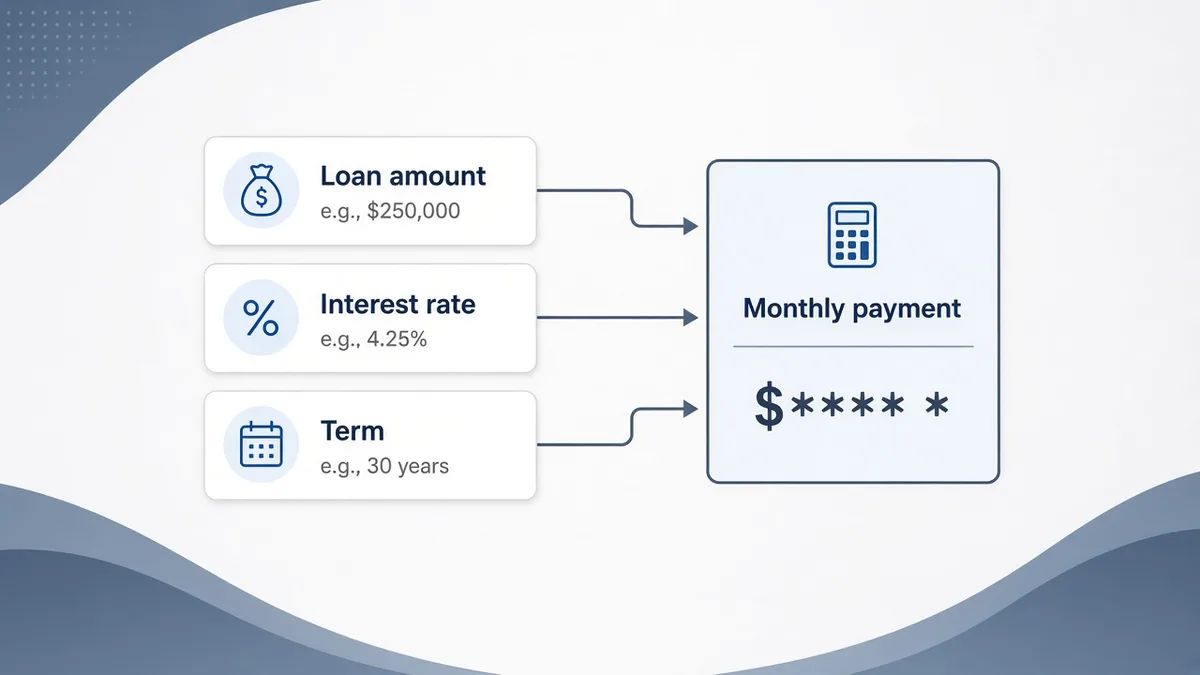
Strip away the branding and a loan calculator is just payment math with clearer labels. You give it loan amount, interest rate, and term. It hands back an estimate of the monthly installment—plus, on this page, total interest and total repayment if you keep every payment on time.
People also call it a loan payment calculator or installment loan calculator. Same idea: how big is the loan, and what does the monthly draft look like if the numbers hold.
Say you want to finance $18,000 at 8% for four years. Drop those figures into the tool above and you’ll see a monthly number. Nudge the rate up a quarter point and watch the payment climb. That’s usually more informative than a single “ballpark” from a sales desk.
Folks use these tools to:
- Get a monthly payment in the right neighborhood
- See how mild—or painful—total interest looks over the term
- Compare a shorter path against a longer path
- Check whether a smaller financed amount still covers what you need
- Play with payoff timing before promising extra payments to anyone
None of that is a loan approval. Lenders still underwrite. Treat the screen like a worksheet, not a promise.
How to use an online loan calculator
You don’t need the amortization formula memorized. You need honest inputs. Soft numbers in, soft numbers out.
1. Enter the loan amount
Use the amount you expect to finance—not the sticker price of a car before trade-in, and not a personal-loan wish list that ignores fees. If taxes, title, or add-ons will be rolled into the note, include them in the principal so the payment matches reality.
2. Choose the interest rate
Half a percentage point sounds tiny until you multiply it across dozens of payments. Grab a rate you’ve seen for your credit range and loan type—or run two: one “hopeful,” one “if underwriting is cranky.”
Your real rate still depends on credit, income, collateral, and whatever the lender is pricing that week. The calculator can’t know that. You can still use it to see sensitivity.
3. Select the loan term
Three, five, and seven years show up often on personal and auto loans. Same loan amount, shorter term: higher payment, less interest in most fixed-rate cases. Longer term: lower payment, more interest, more room to breathe month to month.
Fill those three pieces and the tool above will spit out a monthly estimate. Then change one thing at a time so you know which knob actually moved the needle.
How to calculate a monthly loan payment
Under the hood, fixed-rate principal and interest still come from the same amortizing payment formula lenders have used for decades:
M = P × [r(1 + r)^n] / [(1 + r)^n − 1]
M is the monthly payment. P is the loan amount. r is the monthly rate (annual rate ÷ 12). n is the number of payments (years × 12). If the rate is zero, the payment is simply principal divided by months.
Doing that on paper is a fine rainy-day project. For shopping, let the loan calculator grind it so you spend brainpower on whether the payment still leaves money for groceries and an emergency fund.
A quick worked example
| Input | Value |
|---|---|
| Loan amount | $20,000 |
| Annual interest rate | 8% |
| Term | 5 years (60 months) |
Fixed 8%, 60 months: the monthly payment lands near $405. Total repayment is about $24,332, so total interest is roughly $4,332—if every payment is on time and nothing else gets added to the balance. Teaching numbers only; your quote will differ.
Payment calculator vs repayment calculator
You’ll see both labels online. In the U.S., “payment calculator” shows up more. In the U.K. and a few other English-speaking markets, “repayment calculator” is the familiar phrase. Functionally they’re cousins: estimate what the loan costs each period and, often, over the full run.
Some versions stop at the monthly number. Better ones also show interest paid or a crude total cost. If two tools disagree by a few dollars, check rounding and whether one of them quietly added fees you didn’t notice.
What goes into each installment?
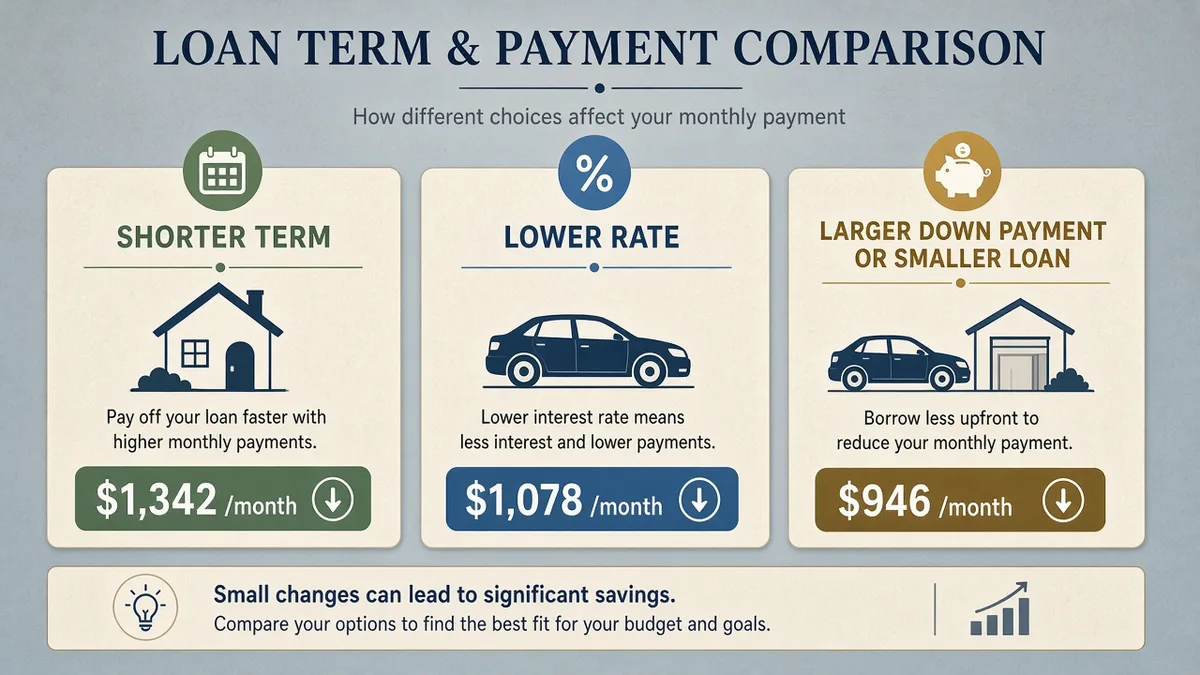
Sales desks talk about “the payment.” Your contract may stack more than principal and interest. Know the split so you don’t compare apples to oranges. A clear monthly loan payment estimate only helps if you know which line items sit inside it.
Principal
Money that actually chips away at what you owe. Feels smaller early in a long schedule. Feels larger near the end.
Interest
The lender’s charge for the outstanding balance. Early payments lean this direction. That’s amortization doing its thing—not a trick unique to your bank.
Fees financed into the loan
Origination fees, documentation fees, warranties, or dealer add-ons can raise the principal. The monthly draft then covers those extras whether you noticed them or not.
What this tool shows
Easly Finance focuses on principal and interest for a fixed-rate installment loan, then reports total interest and total repayment. It does not invent credit-card minimums, balloon payments, or adjustable-rate paths.
When a simple loan calculator is enough
Early browsing? Amount, rate, term—done. You’re ranking options, not signing a note. A simple loan calculator keeps you from falling for a “low monthly” that quietly stretches the term and balloons interest.
Closer to signing? Bring every financed fee into the principal and read the written disclosure. The “cheap” payment on paper is often the one that forgot the warranty package.
Loan affordability: what can you actually carry?
Payment math answers “what does this loan cost?” Affordability asks something ruder: “can your life absorb it?” Two households with the same paycheck can land in totally different comfort zones because one still carries student loans and a card balance while the other doesn’t.
Before you stretch for the lender’s max, line up:
- Gross monthly income
- Debts that already auto-draft every month
- Cash cushion you refuse to empty for the down payment or first bills
- Insurance, maintenance, or fuel costs tied to what you’re financing
- Whether you’re eyeing a short term or a long one
“How much can I afford?” isn’t a slogan. It’s the leftover after rent, food, commuting, and the repair that will someday land on a Tuesday. Lenders underwrite risk. You still have to live inside the payment.
How income and debts affect borrowing
Lenders watch debt-to-income (DTI): monthly debt payments divided by gross monthly income. Earn $5,000 before deductions, already pay $800 in other debts, and add a $350 loan draft? You’re at $1,150 of counted obligations—23% DTI in that toy example.
That’s why an approval can come in lower than the payment you sketched on Sunday. Guidelines aren’t universal, credit overlays differ, and a clean file can still get a manual review. Online tools approximate. A real quote is the conversation that counts.
Shorter term vs longer term: the trade you actually make
A longer term buys payment flexibility. A shorter term buys speed and, usually, less interest—if you can stomach the higher draft without raiding savings.
Rough illustration only: $20,000 borrowed at a fixed 8%.
| Comparison | 3 years | 5 years |
|---|---|---|
| Loan amount | $20,000 | $20,000 |
| Annual rate | 8% | 8% |
| Approximate monthly payment | ~$627 | ~$405 |
| Number of payments | 36 | 60 |
| Approximate total interest | ~$2,563 | ~$4,332 |
Some people take the longer term and throw extra principal at it when bonuses land. Others want the forced discipline of a shorter schedule. Run both in the loan calculator before you pick a team.
How the interest rate changes your payment
Hold the loan size and term still. Move only the rate—7%, 8%, 9%. The payment gap is the whole lesson. Marketing flyers love the lowest teaser; your budget needs the rate you can actually lock.
Fixed rate: principal and interest stay put for the fixed period in the note. Predictable. Popular for a reason.
Variable or adjustable rate: starts one place, can reprice later under the rules in your docs. Fine for some borrowers. Miserable if you modeled only the honeymoon payment.
Our tool is built for fixed-rate math. If you’re shopping a variable product, ask the lender for a product-specific illustration—not just month one.
Amortization: how your balance declines
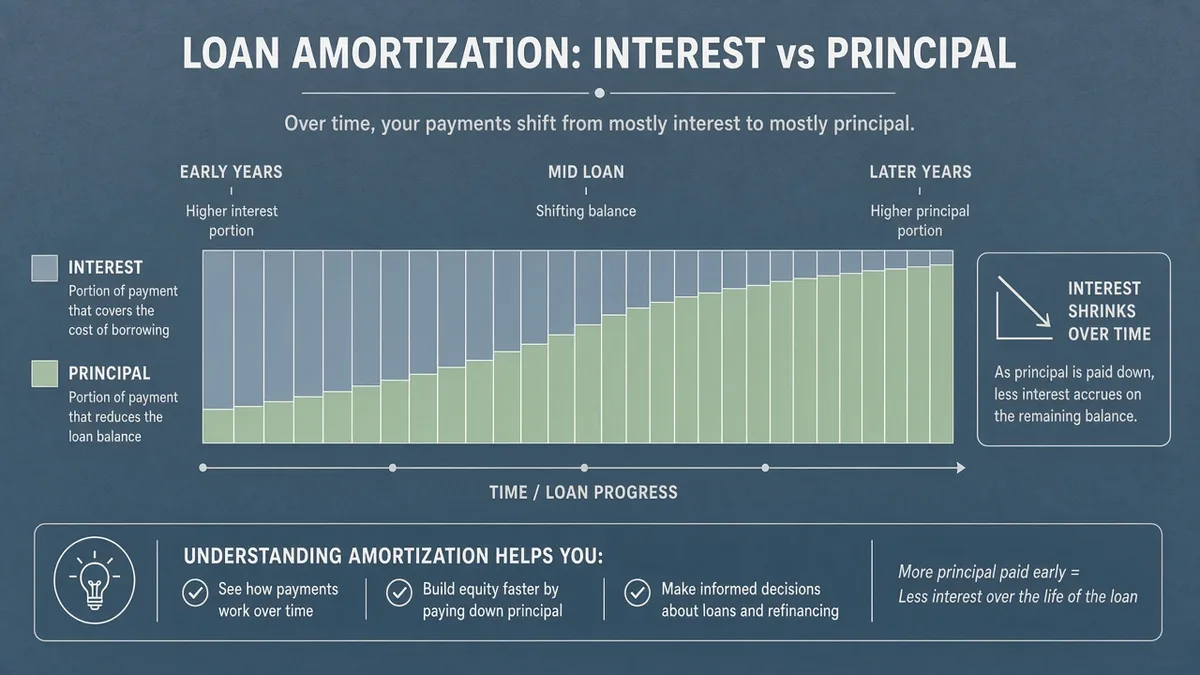
Every payment splits. Interest first covers the cost of the remaining balance; what’s left reduces principal. Early on, interest eats more of the check. Later, principal finally gets the bigger bite.
That’s why “I’ll refinance in a year and skip worrying about amortization” can backfire. If you refinance after a short stay, you may have paid a pile of interest and barely moved the balance.
Why bother reading a schedule before you sign
Because the monthly payment alone hides the long game. Want to throw an extra $50 at principal? A schedule shows why early extras buy more future interest relief than late ones. Just confirm your note allows it and that extras actually hit principal instead of sitting as a prepaid installment.
Paying the loan off faster
Already carrying a balance? Payoff questions get practical: current principal, rate, required payment, and whatever extra you can sustain. Add $50 a month and the calendar shortens. Add a tax-refund lump sum and it shortens again—assuming the servicer posts it the way you intend.
Extra payments show up as a fixed bump each month, a once-a-year shove, or random lumps when cash appears. All three can work. None of them beat keeping a real emergency fund or clearing a higher-rate card first.
Check for prepayment penalties. And say the quiet part out loud to the servicer: “apply this to principal.”
A clean way to decide: run the loan with $0 extra in mind, then imagine $50, then $100. If the jump wrecks your monthly slack for almost no interest savings, keep the smaller bump—or none.
Comparing total loan cost—not just the payment
Lowest payment wins the brochure. Total interest, fees, and flexibility win the years you actually live with the loan. Stack offers on:
- Amount financed
- Rate and whether it’s fixed or variable
- Term
- Estimated total interest
- Origination fees, points, and add-ons
- Prepayment rules
APR can bundle certain financing costs with interest, which is why two loans with similar rates can show different APRs. Read the disclosure. See what’s inside the number instead of treating APR like a magic score.
Fees and extras people forget
Principal and interest get the spotlight. Borrowing still bills you for origination, documentation, optional insurance products, dealer warranties, and—on autos—tax and registration that sometimes get financed. A cracked transmission doesn’t care that your payment looked affordable in a spreadsheet.
When you compare tools or lender worksheets, make sure you’re not matching a principal-only fantasy against someone else’s fully loaded note. Raise the loan amount in our calculator when extras will be financed so the monthly loan payment reflects the real draft.
Getting real value out of the calculator
One run feels comforting. Five runs teach you something. Change the amount. Bump the rate. Shorten the term. Add a maintenance or insurance line in your head even if the form doesn’t ask for it.
Still shopping? Anchor on a payment you can sleep with, then back into how much you finance. Already holding a loan? Stare at the remaining balance and whether extra principal pencils out after you protect your cash cushion. Either way, the website math is homework. The written disclosure is the graded paper.
Ready to try your numbers? Scroll back to the loan calculator at the top of this page. Questions about the Site itself go to info@easlyfinance.com.